
 Responsive Menu
Responsive Menu
Responsive Menu

Rising B2B customer acquisition cost
B2B customer acquisition cost climbs for a reason, and the reason usually isn't the channel. When your positioning has blurred and your website can't turn interest into conviction, paid media doesn't rescue the number. It pays premium CPCs to distribute a message buyers can't repeat back. Here's how to find the real constraint before you approve another budget increase.

The signal underneath the spend
Back in the day, I spent enough time around old stereos to learn something useful. You could have a solid receiver. Good speakers. Plenty of power. But if the record was scratched, or the mix was muddy, turning the volume up didn't improve anything. It just made the flaws louder.
That's what I see with a lot of growth-stage companies right now. Growth softens a bit. Pipeline gets less predictable. Paid media gets more expensive. The team starts reaching for the knobs. More budget. More channel testing. More content. More optimization. Turn it up. Maybe that fixes it. Usually, it doesn't.
Because when growth stalls, the problem is rarely that your team forgot how to run paid media. The signal underneath the spend has gotten weak. Your positioning blurred. Your differentiation softened. Your message got safer. Your website stopped turning interest into conviction. Once that happens, paid media doesn't rescue the problem. It amplifies it, and it bills you for the privilege.
Paid media is a distribution multiplier, not a clarity engine. It puts whatever message you already have in front of more of the right people, faster, so a story that doesn't land in one read gets expensive at scale instead of getting sharper. That's the whole mechanism, and it explains most of what CFOs are seeing in their acquisition numbers this year.
Paid media can be genuinely effective when the fundamentals are strong. It helps a sharp story travel faster. It puts a clear point of view in front of the right audience at the right moment. It creates momentum. What it can't do is create clarity where none exists.
That's where a lot of leadership teams get into trouble. You see efficiency slipping and assume the answer is tactical. New creative. Better optimization. A landing page refresh. More top-of-funnel spend. A new channel mix. Maybe a new agency. Sometimes those things help around the edges. But if the market still doesn't understand who you're for, why you matter, and why you're different, you're paying to distribute ambiguity. Category-level benchmarks like marketing benchmarks and B2B research will tell you the average cost went up. They won't tell you your message is the reason yours went up faster.
The pattern
The conversation becomes about media efficiency when the real issue started upstream. Marketing works too hard for too little return. Sales says leads aren't qualified, or don't get the story. You lose confidence in the channels. Your board starts asking tougher questions. And everyone ends up optimizing campaigns that deliver the wrong thing faster.
Because positioning is the logic underneath the entire growth system, and every downstream cost inherits its weakness. When positioning is vague, your ads cost more, your site converts less, your sales cycle stretches, and your content has to work twice as hard for half the recall. One unresolved decision at the top makes every number below it worse.
Positioning isn't a messaging exercise. It's a leadership decision. A lot of companies treat it like frosting, something marketing tightens up after the real work is done. A headline exercise. A brand workshop. A cleaner homepage. That's backwards. Four questions sit underneath everything, and most companies avoid answering them directly:
Who is this actually for? What problem do you own? What makes you different in a way the market can feel quickly? What are you willing to say clearly, even if it means not appealing to everyone?
When you avoid those questions, you compensate with activity. Busy marketing is often avoidance in a nicer outfit. The company keeps publishing. Keeps spending. Keeps optimizing. But the story has no edge, the value proposition has no shape, and the website sounds like it was assembled by committee. That isn't a media problem. That's a foundation with a crack in it, and the same pattern shows up whether you're a digital bank, a payments platform, a wealth advisor, or a mortgage lender. Our fintech positioning work almost always starts here rather than in a campaign dashboard.
The diagnostic question
Put your homepage next to two or three competitors. Could a buyer quickly tell which one is you, who you're for, and why you win? If not, don't start with campaign settings. Start with the signal.

Four patterns behind a rising acquisition cost
Four patterns come up again and again when growth stalls and the instinct is to raise the paid budget. None of them are campaign problems.
When positioning is vague, every dollar delivers more buyers to a homepage that can't convert them, because nothing on the site gives them a specific reason to care. The channel gets blamed. The cause sits upstream.
What to ask
Put your homepage next to your top three competitors. Can a buyer tell you apart in ten seconds?
Positioning gets handed to marketing as a copy assignment when it's a decision about who you serve and what you're willing to give up. Marketing can express a decision. It can't make one for you.
What to ask
Can everyone on your leadership team answer those four questions in the same words? If not, the foundation has a crack.
Traffic arrives but doesn't convert. Sales keeps explaining the company from scratch even after a site visit. Content exists in volume and none of it changes the conversation. Campaign optimization won't touch any of that.
What to ask
Is sales doing the work your website should be doing? Then rebuild the site narrative before the budget goes up.
Buyers shortlist companies inside ChatGPT, Perplexity, Gemini, and Claude before they ever fill out a form. If you're absent from AI-driven discovery, you're missing the fastest-growing top of funnel while overpaying for the most expensive one.
What to ask
Run your top buyer queries in ChatGPT, Perplexity, and Claude. Does your company appear at all?
Financial services and fintech companies we work with




I was very pleased with the work and outcome of the project.
Jennifer Werner, CMO, Digital Banking Leader
Fix the structure before you raise the budget
Six things, in this order: audience clarity, positioning, message hierarchy, website narrative, proof, and authority. Work them in sequence and the channels get cheaper on their own, because you stop paying to overcome your own vagueness at every step.
At KingFish + Partners we slow the whole conversation down before touching channels. Not because channels don't matter. Because they matter more once the structure underneath is sound. Does the site tell a coherent story? Does that story match what sales says on calls? Do your claims feel generic, or earned? Are you trying to talk to everyone in the category, or to the buyers you can actually win? A lot of expensive marketing problems get less mysterious once you start there.
In practice that means positioning work first, then the website narrative, then the authority content that earns organic and AI-driven visibility, then the search and campaign layer on top of a structure that can carry it. Our full diagnostic sequence follows the same order every time.
Because AI answers now intercept the buyer before the click, and being cited costs you content and structure rather than cost-per-click. Research from Semrush and Ahrefs both point the same direction: AI-generated answers absorb a growing share of the query, and chatbot adoption keeps compounding. Google has been folding generative answers into Search since 2024.
Answer Engine Optimization (AEO) is the practice of structuring your website, content, and authority signals so AI-powered answer engines can confidently find, understand, cite, and recommend your business in response to a buyer's question. Clean structured data is part of it, but the harder half is having a point of view specific enough to quote.
Generative Engine Optimization (GEO) is the closely related discipline of improving how your brand appears in generative AI responses, summaries, and recommendations across ChatGPT, Gemini, Perplexity, and Claude. Our AEO playbook walks through what this takes in financial services specifically.
A real example
We saw this with a financial services client in residential mortgage. They had done the classic SEO work. Content was live, rankings were decent. But they were effectively invisible in ChatGPT, Gemini, Perplexity, and Claude. Within a month of the right changes they became the number one listed and number one cited source in their space across relevant AI responses. The funnel started to move.
AEO and GEO aren't replacements for clear positioning. They're rewards for it. If your story is muddy, machines struggle with it too. But when the signal is clean, this becomes a real alternative to pouring more money into the most expensive channels you own.
Because buyers are getting better at filtering noise and AI systems are changing how discovery works upstream of the click. Volume used to buy attention. Now it mostly buys impressions, and the shortlist gets built somewhere you can't bid on.
So the companies that win won't be the loudest. They'll be the clearest. Clear enough for a buyer to understand quickly. Clear enough for a sales team to build on. Clear enough for a search engine to index. Clear enough for an AI engine to cite and recommend. That kind of clarity is harder work than launching another campaign. It also compounds, which no media buy has ever done. The B2B Institute has been making a version of this argument with the data for years, and consumer trend research keeps confirming how early the decision now forms.
Because a template built from everyone's averages can't tell you what's specifically wrong with your story. Tired of generic playbooks from giant platforms like Salesforce's State of Marketing, Gartner's CMO spend survey, and Bain's growth research? We are too. Those reports describe the average. Your acquisition cost problem is specific.
KingFish + Partners is a small, senior team, so you get a fast, personalized diagnosis and a custom plan built for your company rather than a template. We read the same sector research you do, from Deloitte's industry outlook to The Financial Brand and IAB spend data. We just don't hand you a benchmark and call it a strategy.
A direct invitation
Before you burn more cash on paid media, take a hard look at what you're actually amplifying. Turning up the volume has never fixed a bad signal. If this feels familiar, let's sit down and take a sober look at whether the issue is channel performance or something deeper in the foundation. Reach me at cbrown@kingfishandpartners.com or 978-832-1410.
Award-winning financial services and fintech marketing
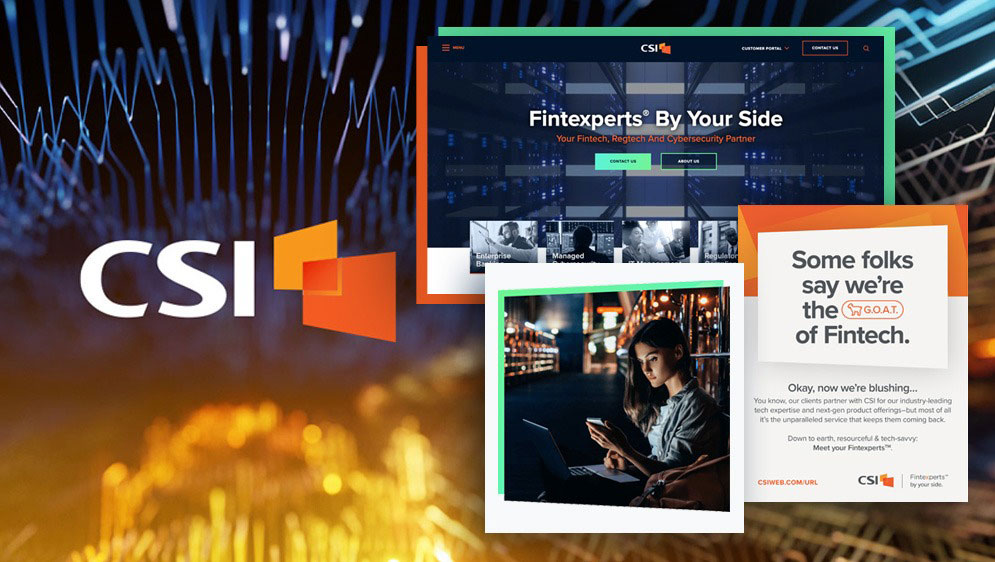
CSI · Fintech Platform
Website redesign, brand messaging, and demand content that moved a fintech platform to value-first positioning across every channel.
Read case study
Nasdaq · Financial Services
A content program built for a global exchange brand, made to hold the attention of senior financial audiences rather than chase impressions.
Read case study
Truthifi · Fintech Startup
Brand strategy, messaging, and identity that positioned a pre-launch platform to stand out and signal maturity to investors.
Read case studyMore on acquisition cost and AI discovery
Ranked #1
A ranked, criteria-based look at the agencies doing the strongest work for fintech and financial services companies.
See the rankingAI Search / AEO
How answer engine optimization wins pipeline before a buyer ever reaches your site.
Read articleWebsite Strategy
Why most financial sites lose pipeline in a redesign, and what fixing the narrative actually takes.
Read articleAcquisition Cost
The specific reasons fintech acquisition stalls, and where the cost is actually hiding.
Read articleWhere to Start
How we work with financial services companies across brand, web, content, and search.
See how we workAI-Assisted Content
How we pair senior human expertise with AI production so authority content ships at real pace.
Explore WetwareTalk to a B2B financial services marketing agency
If growth isn't responding to spend, your story has lost its edge, or your website is working too hard for too little return, you'll find KingFish + Partners easy to talk to. We'll give you a direct read on whether your problem is channel performance or foundation, and what closing that gap involves. You'll speak with senior people, not a junior discovery rep. No pitch deck. No pressure.
Start a conversation
Tell us a bit about what you're working on. KingFish + Partners will reach out within one business day.
Straight answers for fintech and financial services leaders
Usually one of two things: the channel has become less efficient, or the strategic foundation underneath it has weakened. In most cases it's the second. Execution is rarely the issue. Positioning, differentiation, or message clarity no longer gives the market a strong reason to care, so the same media buy converts worse every quarter. Test it by looking at whether your organic and direct traffic converts well. If those are also soft, the problem isn't the channel.
No. Rising B2B customer acquisition cost is usually a symptom rather than the root cause. If your website is vague, your value proposition sounds generic, or your story no longer matches the company you've become, paid media amplifies that weakness instead of solving it. Auction pressure is real and CPCs do rise. But when your CAC climbs faster than your category's, the extra cost is almost always self-inflicted upstream.
Sharpen positioning first, then rebuild the website narrative so it converts the traffic you already earn, then build authority content and AEO so a growing share of top-of-funnel arrives without a media bill. Financial services buyers do long, careful, committee-driven evaluations, so clarity compounds harder here than in most categories. Most of the CAC reduction we see comes from conversion and organic share, not from smarter bidding.
Start with audience clarity, positioning, message hierarchy, proof, and website structure. If those are shaky, more spend creates more waste. The strongest paid media results come when the story underneath is already converting organic and direct traffic efficiently. If it isn't, you're about to pay a premium to find out.
Answer Engine Optimization is the practice of making your website and content easier for AI-powered answer engines to find, understand, cite, and recommend when buyers ask questions. It goes beyond traditional SEO by structuring content specifically for how AI systems synthesize and surface information: direct answers to real buyer questions, clean structured data, named authorship, and claims specific enough to quote.
Generative Engine Optimization is the discipline of improving how your company shows up in AI-generated responses, summaries, and recommendations across tools like ChatGPT, Gemini, Perplexity, and Claude. GEO helps your brand get accurately understood and recommended in generative AI environments, which matters most at the shortlist stage, before a buyer has visited anyone's website.
SEO helps your company rank in traditional search results. AEO helps your company appear inside AI-generated answers. GEO extends that to how your brand gets described and recommended in generative environments. They share infrastructure but reward different things: SEO rewards pages, AEO rewards extractable claims. The strongest strategy in 2026 runs all three together.
Not entirely, and you shouldn't want them to. Paid media still has a place, especially for launches, competitive defense, and compressing time to market. But AEO and GEO can become a meaningful top-of-funnel engine, particularly as paid costs rise and buyers increasingly use AI tools to research options before they ever click an ad. Think of it as changing the mix, not abandoning a channel.
Run the queries your buyers actually ask in ChatGPT, Gemini, Perplexity, and Claude, and see who gets cited, summarized, and recommended. A lot of companies are surprised to find that even with decent SEO performance they barely exist in AI discovery, because ranking and citation are different mechanics. Reach Cam at cbrown@kingfishandpartners.com if you want that run for your category.
Carefully and in stages, not all at once. We start by identifying which campaigns still produce efficient, qualified leads and protect those, then redirect the budget buying diminishing returns into fixing the foundation: positioning, message clarity, and the AEO and content work that earns organic and AI-driven visibility. You taper paid spend as organic and answer-engine citations ramp, so pipeline stays steady through the transition rather than dropping off a cliff. The goal isn't abandoning paid media. It's stopping the use of paid media to paper over a positioning problem it was never going to solve.
We work across the full range of the sector: banks and credit unions, digital and challenger banks, payments and card platforms, lending and mortgage companies, wealth and asset management firms, RIAs and advisory practices, insurance carriers and brokers, insurtech, capital markets and exchange businesses, financial data and analytics providers, core banking and fintech infrastructure vendors, and B2B SaaS companies selling into financial institutions. If you sell a considered financial product or platform to a careful buyer, this is the right conversation.
About this article

Written by Cam Brown, President and CEO of KingFish + Partners. KingFish + Partners is an independent B2B marketing agency in Beverly, Massachusetts. Cam has spent more than two decades helping fintech and financial services companies bring acquisition cost down and restart growth, and he works directly with the leadership teams who own the pipeline number.
Reviewed by the B2B Review Board. Published March 12, 2026 · Updated August 31, 2026.