
 Responsive Menu
Responsive Menu
Responsive Menu

Answer engine optimization for B2B SaaS
Your buyers are building vendor shortlists inside ChatGPT, Perplexity, and Google AI Overviews before they ever land on your site. If your brand isn't in those answers, you're not losing a ranking. You're losing the evaluation before it starts. Here's what answer engine optimization actually takes in B2B SaaS.

The two ways a B2B SaaS brand goes missing
Almost every B2B SaaS company we look at is missing from AI answers for one of two reasons. Naming which one you have changes the entire work plan.
Problem 01
Ask ChatGPT or Perplexity which platforms solve the problem your product solves and competitors come back instead. Your category is being explained to your buyers without you in it.
Problem 02
Strong domain authority and page-one rankings don't carry over. Google ranks pages. AI features extract and cite claims, and that's a different structural requirement your site was never built for.
These two problems share a cause. A site built to persuade a human reader, organized around your internal product taxonomy, gives an AI system almost nothing clean to extract. It can crawl you and still not be able to say what you do, who you serve, or why you belong on a shortlist. So it leaves you out of the answer.
For SaaS platforms, developer tools, data and analytics vendors, MarTech companies, and enterprise software firms, that omission compounds. Every AI answer that names a competitor and not you trains the next buyer's shortlist, and the gap widens each quarter you leave it alone.

SEO as infrastructure, AEO as advantage
SEO makes you discoverable. AEO gets you onto the shortlist. You need both, and they are not the same job.
Search engines stopped just returning links. They synthesize. A VP of Revenue Operations asking which forecasting platforms suit a mid-market sales team now gets a composed answer with three or four named vendors in it. That answer either includes you or it doesn't, and there's no second page to rank on. Some practitioners split answer engine optimization from generative engine optimization. We treat them as one objective: being present and accurate when an AI system answers the question your buyer actually asked.
Technical health, crawlability, intent-aligned keywords, clean information architecture, and page speed still matter. For B2B SaaS that means category pages, comparison pages, use-case content, and integration documentation built around how buying committees search rather than how your product team names modules. That work gets you found. It does not get you cited.
AEO structures content so an AI system can extract a specific answer and attribute it to you. Direct answers near the top of the page, tight definitions, scannable subheads, explicit entity relationships, and question-shaped headings all raise the odds you get pulled into a synthesized response. It's the difference between content an AI can read and content an AI can quote.
SEO content can take four paragraphs to arrive at its point. AEO content has to lead with the answer, then expand. That single change to how a page opens does more for AI citation than most technical work, and it's the change internal teams resist hardest because it reads as giving away the conclusion. Proper structured data then tells the machine what it just read.
Answer engine and generative engine optimization
Two disciplines, one outcome: your brand appears accurately when an AI system answers a vendor-evaluative question about your category.
AEO
Structuring content so AI systems retrieve and cite it accurately when buyers ask about platforms, vendors, and use cases. AEO is to AI assistants what SEO is to Google.
GEO
Earning accurate representation inside AI-generated answers, so your positioning survives the summarizing when a model explains your category to a buyer.
In B2B SaaS the shortlist now gets built before anyone visits your website. If an AI can't quote you, you're not in the room.
Cam Brown, President & CEO, KingFish + PartnersThe reason AEO bites harder in B2B SaaS than in most categories is research intensity. Buying committees do extended independent research before they'll talk to a vendor, a pattern Gartner's research on the B2B buying journey has tracked for years. That research is now AI-assisted by default. Miss the answer layer and you lose influence before your first marketing touch lands.
We've worked with B2B tech clients who rank well on Google and are close to absent across ChatGPT, Gemini, Claude, and Perplexity. That's the default state for most SaaS sites built before 2024. The gaps sort into two groups.
Front-end factors AI reads differently
Back-end structure most programs skip
Most of this is fixable once you can see it. The catch is that AEO rarely gets treated as a first-class deliverable, so it slides to the end of a project and gets bolted on. We engineer it into strategy work from day one.
AEO across the buying journey
It doesn't add a stage. It changes what each stage has to publish, because at every stage a model is now standing between your buyer and your site.
Top of funnel
Buyers ask what a category does and whether it applies to them. Your category and educational pages have to answer in the buyer's words, directly, in the first two sentences, or the model summarizes someone else.
Middle of funnel
Buyers narrow the set. Comparison pages, use-case content, and integration docs that answer the specific question, not the generic positioning one, win the shortlisting moment in both channels.
Bottom of funnel
Buyers want to know what it costs and what onboarding involves. Clear pricing explainers and implementation FAQs decide whether AI-influenced visibility turns into a demo or evaporates.
The compounding effect is what makes this urgent rather than interesting. Citations drive branded search. Branded search signals authority to Google and to the models. That authority drives more citations. Companies that start now build a lead that gets more expensive to close every quarter, which is the same reason a website redesign in 2026 has to treat AI discovery as a launch requirement rather than a phase two.
Measuring AEO against pipeline, not impressions
The same things that always counted. What changes is that traffic volume stops being a usable proxy for any of them.
When a buyer does most of their evaluation inside an AI assistant, a large share of your influence produces no session at all. Sessions can stay flat while your pipeline improves, and they can climb while it doesn't. So the measurement has to move to the actions that indicate a real hand raised, and to the AI visibility that precedes them.
The conversions worth tracking
The AI signals that lead them
Tie the two together and the program becomes arguable in a board meeting. Citation rate climbing while demo requests stay flat tells you the gap is on the conversion side of the site. Both moving together tells you to keep going.
Why the 2020 playbook keeps getting run
Not because they execute SEO badly. Because they execute only SEO, while the advantage moved to a channel nobody on the team is measured on.
Most SaaS companies have real domain authority and solid rankings, and appear in a fraction of AI answers for their own category. Much of their site is organized around internal product naming that means nothing to a buyer asking a model which platforms help sales teams prioritize outreach from buying signals. The content is comprehensive. It just isn't extractable.
Where traditional SEO agencies stop
Where SaaS-native agencies stop
This is also why generic playbooks pulled from aggregate industry reports, the State of Marketing genre and its cousins, can't get you there. They describe a category in aggregate. They can't tell you which four prompts your buyers use before a demo, or why a model names your competitor and not you.
Build vs buy for a B2B SaaS AEO program
It depends on whether your problem is executional or strategic. When it's execution, internal ownership often wins. When it's positioning and structure, it rarely does.
Internal teams have advantages an agency can't replicate: product depth, no onboarding lag, and the ability to ship a fix the same afternoon. The catch specific to AEO is that the people closest to the product are the least able to write the sentence a buyer would recognize, because they've stopped hearing the jargon.
Running it internally
Hiring an outside partner
If you're weighing partners, it's worth seeing how the field actually shakes out. We put our own view on record in our ranking of the top SaaS agencies, criteria included.
Wetware, our human-guided content engine
The strategy part of this hasn't changed. Know the brand, the ideal customer, the buying journey, and the pain. What changed is the volume of content required to cover the opportunity, and that's the part we solved.
Week one
We identify where your brand needs to appear across the funnel, which searches and AI prompts dominate at each stage, and what content is missing. SEMrush cluster analysis alongside our own prompt mapping.
Start hereProduction
Strategically directed, human-voice content pushed straight into your CMS. Not AI slop. Human-guided work that carries your positioning and your buyer's real evaluation criteria.
See the approachMeasurement
We track share of voice across the AI engines, the prompts you surface in, and the pages being retrieved, then feed that back into what gets built next.
Explore servicesWe call it Wetware: human-driven strategy, AI-accelerated production. It exists because covering a full B2B SaaS buying journey with genuinely useful, extractable content is more writing than any internal team or traditional agency produces by hand, and thin content earns no citations at all.
Talk to a B2B SaaS marketing agency
We'll run your category prompts, show you where you appear and where a competitor appears instead, and give you a direct read on what closing that gap involves. You'll speak with senior people, not a junior discovery rep.
Award-winning B2B tech marketing

Connection · Content marketing
An infographic campaign grounded in the questions enterprise IT and procurement buyers were actually asking, recognized with a Content Marketing Award for Best Infographic Series.
Read case study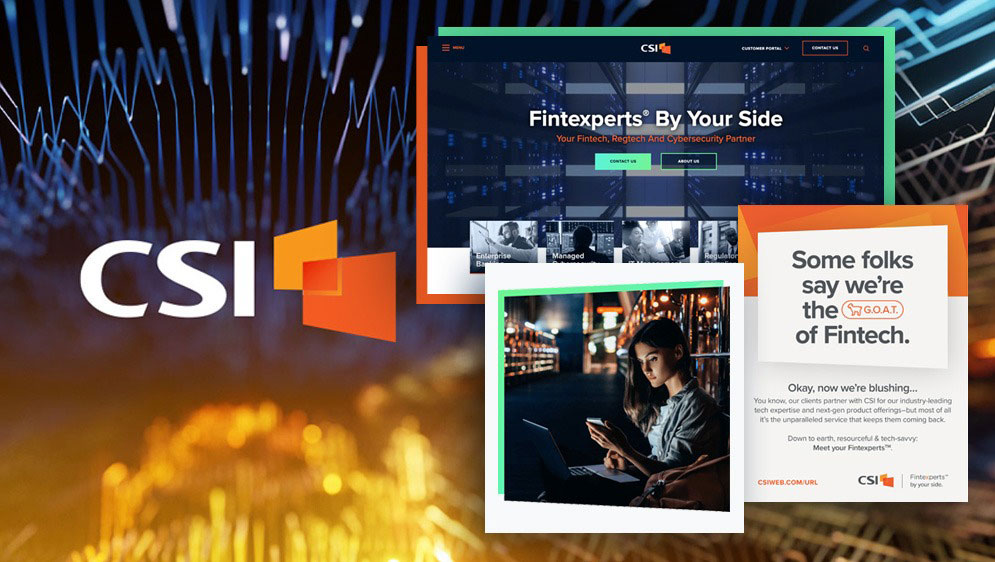
CSI · Integrated campaign
Positioning and campaign work that turns a complex technology offering into a story a buying committee can follow and act on.
Read case study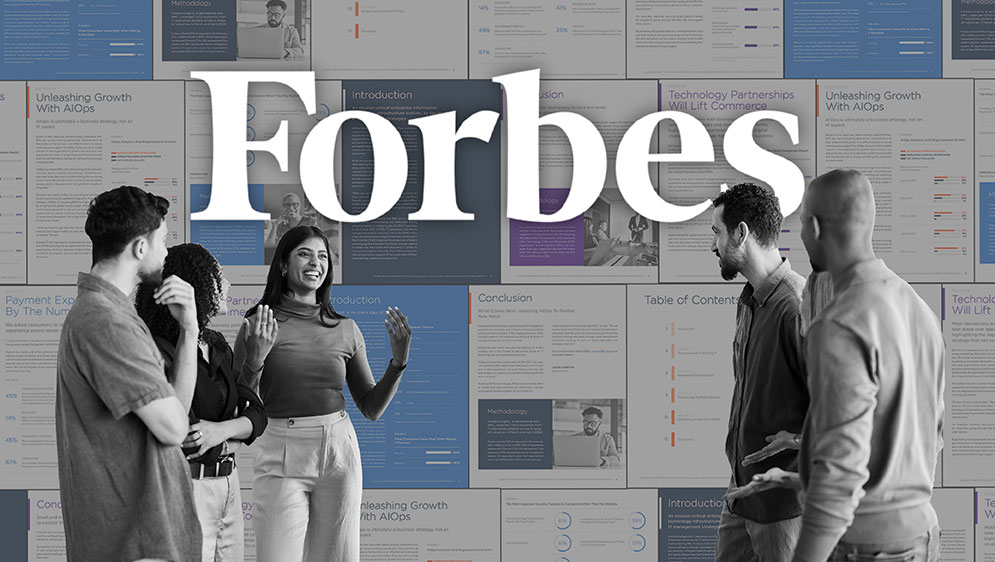
Forbes Insights · Research content
Executive-grade research content built to hold the attention of senior B2B decision makers and give sales teams something worth sending.
Read case studyMore on B2B SaaS marketing
Free consultation, no obligation
Send a note with your site and the questions your buyers ask before a demo. We'll come back with what the AI engines currently say about your category, where you sit in those answers, and what a realistic path to being cited looks like. No pitch deck required.
B2B SaaS AEO questions
Answer engine optimization structures your content so AI systems including ChatGPT, Claude, Gemini, Perplexity, and Google AI Overviews can accurately retrieve and cite it when buyers ask about software categories, vendor comparisons, use cases, and implementation. It matters in B2B SaaS because buyer research is now AI-assisted by default. Traditional SEO gets you found when someone searches for you. AEO gets you discovered by someone who doesn't yet know you exist. The most common reason a SaaS company stays invisible is that the site was built for human readers without any thought to how a model crawls, extracts, and attributes content.
SEO optimizes for a ranked list of links. AEO optimizes for being the source a model quotes inside a synthesized answer. In practice that changes three things: content leads with the answer instead of building to it, schema markup and entity consistency become load-bearing rather than optional, and success is measured in citation share across the AI engines rather than in rankings and sessions. You need both. SEO is the crawlable foundation that makes AI discovery possible, and AEO is what gets you onto the shortlist once you're discoverable.
Programs that cover positioning, content architecture, schema implementation, and AI visibility measurement typically run from mid-five figures for focused category and use-case work up to six figures for multi-product or multi-segment engagements. That includes the SEO foundation the AEO work sits on. The more useful question is pipeline ROI. If your current presence produces a thin flow of demo requests and a program materially changes that, it pays back through pipeline volume and deal quality. We scope against your specific situation in an initial free consultation.
Technical fixes and schema implementation tend to show measurable impact inside four to six weeks. Content restructured for extractability tends to show citation increases in the 60 to 90 day range, and that's usually where SaaS companies see the fastest lift because they're gaining ground in a channel where they were absent. Broader authority work across new content and third-party entity signals runs four to six months for durable results. Branded search lift typically becomes visible in the same window as the first citation gains, then compounds as the content library grows.
Track AI visibility directly: how often ChatGPT, Perplexity, Gemini, and Claude cite you when buyers ask questions in your category, which specific prompts you appear in, and which of your pages get retrieved. Rank tracking misses all of it. Then tie that to the outcomes your team is measured on, which are qualified traffic, demo requests, and pipeline. If citation rate climbs and demo requests don't, the gap is on the conversion side of the site, and that's where the buyer-journey work earns its keep.
Usually one of four causes. The site is optimized for category interest rather than evaluation intent, so it attracts people researching the problem instead of buyers ready to choose. Positioning leads with feature language rather than buyer outcomes, so a visitor can't tell in ten seconds whether this is for them. Credibility signals are thin or buried three clicks deep. Or the conversion path has friction, with demo forms below the fold and no context about what happens next. Audit organic traffic by intent stage and match each content type to its correct conversion goal, and most of the gap closes.
Generative engine optimization targets how accurately your brand and positioning survive when a model synthesizes an answer about your category. For B2B SaaS it matters because those synthesized answers set vendor shortlists before a sales conversation happens. GEO is built from consistent, authoritative entity signals across your own site and third-party profiles like G2, Capterra, LinkedIn, and partner directories, plus genuine content depth around your specific use cases and the buyer roles that matter most. AEO gets you cited. GEO decides whether the citation describes you the way you'd describe yourself.
If the problem is executional, like publishing consistently or keeping comparison and integration pages current, an internal team that moves fast and knows the product handles it well. If the problem is strategic, like unclear positioning, low citation frequency, or weak conversion from organic traffic, an outside partner with real SaaS AEO experience gets there faster. The specific challenge internally is proximity: teams close to the product structure content around product logic and use feature terms buyers never search. An outside partner brings buyer-perspective clarity and pattern recognition from working across several SaaS companies hitting the same wall.
Lead every page with a direct, self-contained answer to the question the page is named after, then expand. Implement thorough JSON-LD that defines your organization, product category, integrations, and target buyer roles. Use buyer vocabulary in navigation and headings rather than internal product naming. Keep your entity signals consistent across your site and the review and directory profiles buyers check. Then build genuine depth around your specific use cases, because models weight authoritative, verifiable sources with clear entity definition, and thin coverage of a topic earns no citation regardless of how well the page is structured.
We work across the B2B technology landscape: SaaS platforms, B2B tech startups, developer tools and infrastructure providers, MarTech and analytics vendors, data and AI platforms, cybersecurity companies, enterprise software firms, fintech and payments platforms, IT services and managed service providers, and hardware companies selling into a technical buying committee. The common thread is a considered purchase, a multi-stakeholder buying committee, and a buyer who researches extensively before ever talking to sales.
About this article

Written by Cam Brown, President and CEO of KingFish + Partners. Cam has spent more than two decades building brands, websites, and content programs for B2B tech and SaaS companies, and works directly with the leadership teams who own the pipeline number.
Reviewed by the B2B Review Board. Published April 16, 2026 · Updated August 25, 2026.