June 15, 2025

Faster ways to make mistakes

Swinging a hammer all day is hard work. When I was in my early 20s, I spent time building houses on Nantucket. A beautiful setting, but the reality is, construction is a tough gig. And like many professions, technology has lightened that load. Nail guns – air and electric- have been a productivity revolution. In the hands of a skilled worker, nail guns make the work easier and faster. In the hands of a newbie or weekend warrior, however, they often prove to be a way to make mistakes faster, complicating and adding work. The current state of AI has that same sort of feel. The hype promises easy expertise, but the reality is all too often a faster, easier way to make mistakes.

Hallucinations. Authoritative bullshit. Slop: euphemisms abound for the ways in which a poorly managed GPT can make mistakes. Just as simply swapping out hammers for nail guns is a recipe for manifold disaster, a wide swath of businesses are finding that simply inserting AI into a business process is not a road to ROI. Success with AI requires a basic understanding of what it is and is not. A nail gun can do the same job as a hammer, but it is a very different tool and requires a very different approach to realize success.

Hand a hammer to a newbie and you get some bent nails and a little wasted time as they ramp up. Hand out AI tools across the business expecting magic and you may end up with a raft of tricky troubles and reputational harms. The potential, and likely, damages of hasty AI adoption go beyond fines and lawsuits, but more on that in another post.

 I saw AI’s possibility, and its potential for problems, early on and determined that the best way to get the most out of the technology was to give it the focus it requires. It’s why Wetware Studios exists outside, but alongside, my original content marketing agency KingFish + Partners. A nail gun is not a hammer.  Putting in place the measures – dedicated prompt engineers, expert humans in the loop to police and improve output – ensures our use of AI for clients delivers great content at scale, without the mistakes.


Cam Brown
CEO & Content Marketer

June 4, 2025

Move fast and break everything?

They’re banning phones in classrooms. Red states and blue, it’s a bipartisan push. Eighteen years after the debut of the iPhone, education is scrambling to manage the fall out in learning from the smartphone revolution - just in time for the arrival of AI. Education is far from alone in its scramble.
 When the pandemic hit, the tech vendors (looking at you, Zoom), consultants and academics assured us that the future of office work was definitely remote. Policies changed, employees de-camped for more scenic vistas. Office leasing costs went down, employees from everywhere could be hired to work anywhere! A few years later, however, companies are grappling with some evident shortcomings of the remote-work reality (collaboration? camaraderie?) and how best to alter it. A hybrid return to office seems to be the predominant initial gambit.

 Silicon Valley has always lauded The Disruptor. The model for tech start-up success has long been a fast, hard charge that scatters the pieces. Get noticed and go big. The rise of AI is following that same playbook. Where once the rush was to the Web, now it is to AI. As with the Web, there is truth to the hype

I spent 11 years during the dot-com boom as an executive with tech trade magazine publisher Ziff Davis. I launched KingFish + Partners after that boom went bust. I understand the power of technology and the hype that drives its adoption. This experience and understanding informed my decision to launch Wetware Studios as an AI-focused operation, rather than look for spots to plug AI tools into KingFish.

Navigating the frothy terrain of a rapidly evolving vendor landscape. Understanding the strengths and weaknesses of various LLMs. Learning how to engineer effective prompts and institute efficient processes to put expert humans in the loop in order to ensure output is accurate, on-brand and human. Getting AI right takes thought and real focus. That’s what we do in Wetware Studios, and it’s working.

 And KingFish? Oh, it’s definitely staying in the mix. That’s essential. AI feeds on human creativity, originality and insight. Trying to replace that human capability with code is a recipe for a raft of unintended consequences (more on that in another post).

 Artificial Intelligence is powerful stuff - just not the click-click-done magic the current hype would have you believe.


Cam Brown
CEO & Content Marketer

May 12, 2025

AI writes fast. It also fakes fast.

If you haven’t used ChatGPT’s Deep Research tool yet, get ready to have your hair blown back, and then set on fire.
On Saturday morning, I asked the tool to do some research for an article I wrote on the benefits of private debt for institutional investors. I gave it an earlier draft, then clicked “Send.” In 13 minutes, it cheerily produced a 3,000-word research paper, complete with copious sources, tables, pull quotes, and a full bibliography. It cited only reputable sources like PitchBook, Deloitte, and McKinsey.

I copy-pasted that paper into a Google Doc, downloaded it, and fed it into a custom GPT designed to write articles for the client, complete with their brand guidelines and corporate details. In about two minutes it created a 1,200-word blog post that, for all intents and purposes, appeared to outperform anything a human writer could do without spending two days on craft, and invoicing over $1,000.

But there was one glaring problem.

The research was a joke.

The Deep Research AI gave me copy like:

According to CIO Nicole Musicco, the move was driven by the ability to deliver “steady distributions, real downside protection, and better relative value than equity.” The company reallocated billions and sent a clear signal that institutional portfolios are rethinking how they can drive innovation and income at the same time.

That’s not bad. If a human writer gave me that, I wouldn’t blink. But when I asked for a source link, the custom GPT did a little finger pointing to the research document. And the sources referenced by the research document didn’t contain any such quote. Nor did I find it anywhere online.

The same thing happened with four other direct quotes and exact statistics in the same article section. When I asked ChatGPT what happened, it apologized and hedged. In other words, ChatGPTs vaunted deep research tool had made up its quotes and data.

Used by a trusting editor, AI has the potential to destroy your brand credibility overnight. In 2024, a reporter from Cody Enterprise in Wyoming resigned after he used AI to fabricate quotes and details in his stories. His deception was outed, and he admitted to using AI. But he — and his paper — didn’t know his article had fake news in it. Their only real crime was trust.

Thankfully, working with the GPT and clarifying my needs, I was able to retool my own article with verified sources and accurate pull quotes and data. And it didn’t take two days, or even half a day. It was more like half an hour.

There are two key takeaways here.

First, for content managers, marketing managers, and editors: Vanilla AI almost always hides a poison pill. You can’t, can’t, can not trust that what it gives you is true. You must put an expert writer in the process. Someone who knows how to find and verify information from respected sources and how to weave it into a compelling narrative in the right voice, tone, and engagement level. That person needs to be there to guide the AI and tell it where and when it wanders off the rails, and show it what to do instead.

Second, if you’re a writer who is horrified (like most writers I see online today) by the rise of AI and the death of professional writing, you have a clear and exciting way forward. I think it’s more than a little glib and insensitive to say you can get a job as a “prompt writer.” I think that cheapens the years (and possibly decades) of work you’ve put into learning your craft.

I also think there’s a real danger of experienced writers deciding their skills have been rendered null and void. That’s anything but true.

The real path forward is to be the expert guiding the machine at every step along the way. In my view, the way to think of it is that you likely won’t command the same rate you used to for a 1,500-word article, but you might not need to.

Writers — and especially freelance writers — have always targeted a certain hourly rate. I believe that by working as an expert human in the loop, you can still earn that rate, guiding AI tools to write high-quality copy, and potentially higher-quality copy, faster than was possible before AI came along. In other words, writers are increasingly wary of AI taking their jobs, and publishers should certainly be excited by the efficiencies it offers. But both parties should fight hard to put a human expert in the driver’s seat.

How are you using AI to enhance your content creation, and what role do you see for human experts?


Tom Gerencer
Lead GPT Trainer and Editorial Director, Wetware

April 18, 2025

Why AI Is Like Working With Rain Man

Generative AI isn’t magic. It’s not sentient. (It’ll actually tell you that itself.) And definitely can’t mimic human judgment. But when you know what it does well — and where it stubs its toe — it can be a superhero.
In other words, treat it like a talented human. We all have weaknesses, but effective leaders don’t ignore them. They build systems that support employee weak spots, and lean on strengths and skills. The same goes for AI. If you give it too much rope, it’ll spin out generic, repetitive, or flat-out wrong results. Instead, learn what it can and can’t do. Then build systems around it to refine the gold and drain the dross.

What Gen AI Nails

When you use generative AI the right way, it becomes a force multiplier.

  • Writes well with the right input: Feed it a clear angle, a target tone, and real-world examples. It’ll produce strong, clean, on-brand copy.
  • Integrates SEO efficiently: Point it to priority keywords and preferred structures. It can work them in without sounding robotic or spammy.
  • Researches fast inside guardrails: Define the goal, scope, and constraints. It’ll serve up links, data points, and structured takeaways.
  • Builds structure-rich content: Want a table, bullet list, or cleanly sectioned piece? Tell it what you’re building and who it’s for, and it’ll do it beautifully.
  • Iterates at light speed: Ask for five versions of a weak section. It’ll give you options to refine and remix.

Where it Lands in Slop

Hand AI a vague prompt and you’ll get at best a stuttering mess.

  • Writes vanilla when unguided: Generic in, generic out. If you don’t tell it the style, persona, and point of view you’re looking for, it’ll write the literary equivalent of shampoo instructions.
  • Repeats itself without planning: Without a content strategy, it’ll loop back to the same words, phrases, and sentence structures.
  • Invents or misrepresents data: Leave it to do its own “research,” and it’ll hallucinate wrong answers, then try to convince you they’re true.
  • Muddles outputs without a goal: Ask for a table without defining the audience or use case, and you’ll get a beautifully formatted brick.
  • Wastes your time during revisions: If you don’t have a system in place to track changes or preserve strong sections, each iteration is a new spin of the wheel.

So What’s the Fix? Systems.

Think less “magic machine” and more “fast assistant with no instincts.” It’s kind of like working with Rain Man. If you give it the right support, you’ll never have to wonder where your fish sticks are.

  • Use templates. Tell AI the goal and voice, and show it a sample of what success looks like. Don’t let it guess. (It will. Badly)
  • Keep a “what works” folder. Save snippets, formatting styles, tone notes, and high-performing outputs. Reuse and refine instead of starting cold.
  • Ask for multiple versions, then splice. Don’t edit a weak section. Get five rewrites, then cut and combine the best.
  • Audit outputs critically. Verify links, data, and claims. If a stat looks too good to be true, it probably came out of the LLM hat.
  • Treat AI like a specialist. It’s great at executing, but it can’t strategize. The idea, structure, and quality control are up to you.

Bottom Line

The worst way to use generative AI is to over-trust it. The second worst way is to avoid it. The best is to know its strengths and weaknesses. Build workflows that harness the first and protect against the second, just like you would with a human hire.


Tom Gerencer
Lead GPT Trainer and Editorial Director, Wetware

March 26, 2025

Your Text Is AI Generated

Can you really check for AI-generated content?

No. But you can check for bad writing.

When AI hit the scene in 2023, nobody cared whether a blog was written by AI. If it was cheaper and it got the job done, where was the harm?
Then the questions started popping up. Was it ethical? Would it steal bread from the mouths of human writers and their families? Was it plagiarism? Was it accurate? Would Google penalize it?

It’s still a bit too early to tell if AI is taking a concrete crusher to the job of content writing. In a survey by content guru Jennifer Goforth Gregory, most writers said they’re earning more today than ever. And most are using AI tools to get more work done. Yet on LinkedIn, you’ll see story after story about writers losing their careers to AI. It does feel a lot like a pandemic.

Next, originality. Yes, AI-written content is plagiarism — or not — depending who you ask. One study found AI can “reuse words, sentences, and even core ideas.” Then again, “Since chatbots generate new text ... GAI could be considered more like ghost writing than plagiarism.” The bottom line is, AI learned to write by analyzing work by human writers. To which AI proponents answer, “So did you.”

What about accuracy? AI has a spotty record here. It can craft precise responses just as often as it can hallucinate. Most AI tools now come with a disclaimer like, “ChatGPT can make mistakes. Check important info”

As to whether Google penalizes AI content — in a way. Google’s guidelines greenlight AI-generated copy. But it has to be “good.” In other words, it has to demonstrate expertise, experience, authority, and trust (E-E-A-T).

Therein lies the tale.

According to Google, the question isn’t whether an article was written by AI. The search giant says 10 years ago there was a glut of ghastly human-generated content. Their job back then was to separate the literary wheat from the electronic chaff. That’s still their job today.

And that’s where AI checkers come in.

Most content strategists will tell you AI checkers plain don’t work. For instance, here’s a screenshot from an online tool that flags a healthcare article as AI-generated.

The problem? The article was written by a human in 2021, when ChatGPT was just a gleam in OpenAI’s eye.

Google, “How do AI checkers work?” and you’ll find they’re AI-powered tools themselves. They compare massive numbers of AI-written samples to human-written samples. Through this training, they learn to “know it when they see it.”

So — what’s different about AI-generated text?

It’s generic.

The problem is the way AI is trained. Those millions of samples are kind of like looking at a million dogs, then sitting down with a charcoal pencil and a sheet of foolscap and drawing one generic Fido.

See the problem?

That’s not how humans work. They’re quirky. Obstinate. They draw on their unique experience. They don’t aggregate and genericize. Creative minds rebel against the commonplace. They learn the laws so they can break them. Twist them. Make them fresh.

It’s the very “sameness” of machine-made content that AI checkers learn to spot. They flag cookie-cutter writing that uses the same words, phrases, and cliches that “everybody else” does.

Put another way, AI checkers don’t call out the original or the iconoclastic. Content that bucks the status quo slips through their digital fingers.

That’s why, if you run 100 blog posts from 2020 through an AI checker, most will trip the AI-generated trigger. It’s not because some early AI model wrote them, but because they’re stiff and unoriginal. Google didn’t rank that kind of writing then, by humans, and it won’t rank it now, by AI writing tools.

So, yes, AI checkers work. But they don’t spot AI-generated content. They spot bad writing.

The solution is to put a human expert in the loop. Someone who can “twist the straight line,” to coin a phrase from comedy writing. Someone with a unique background, full of all the foibles of a human life. Someone who sees the world as no one else can. A living, breathing writer who doesn’t approximate and reduce, but who works to occupy the interesting edges around the fractal fringe of an idea. Someone who can show us something new. It’s that kind of writing that engages audiences. So far, only human writers know the way to make it tick.


Tom Gerencer
Lead GPT Trainer and Editorial Director, Wetware

March 25, 2025

A shock ran through the content marketing world in 2023

Businesses hit AI like a tarpon on a jerkbait, as more than half of all companies struck the flashing lure of AI-generated content. AI use surged 47% to $66 billion. ChatGPT became the fastest-growing app in history. And 56% of users in a blind study said they liked AI-written articles better than their human-written counterparts.
Then flesh-and-blood reality came calling.

CNET was publicly lambasted for using AI to write a stream of plagiarism. The site lost credibility and sold for half its previous worth. Consumers shied away from openly AI-assisted publications, lamenting the loss of the human touch. Quality and accuracy issues reared their carping heads, and the term “AI slop” crashed the lexicon. Businesses have since called a collective takeback, fleeing AI-generated content use in droves. The flood tide of AI confidence has been followed by a matching ebb of digital regret.

So — is the party over for AI-written content?

Enter HITL — Human in the Loop.

With a human in the process, AI takes its rightful place in content creation — as a tool. Rather than leading the charge, it follows the direction of seasoned human content pros. In the same way that a hammer and a skilsaw can’t build a house without a contractor to wield them, a GPT can’t write an engaging thought-leadership article on risk management, or a traffic-getting blog on how to manage diabetes, without human help.

Only a human can make articles that resonate with humans. Why? Because only humans know what matters most to *us*.

What AI *can* do is make human writers faster and more effective. It can do lightning-fast research on the pain points around homeownership or retirement or PPOs, helping the writer to build empathy for the reader in minutes instead of hours. It can find and verify better sources.

Write suggested outlines. Draft paragraphs studded with the right keywords, worked into the text in natural ways. Verify accuracy. Call out omissions, missed opportunities, and awkward phrasings. And guided correctly, it can craft human-sounding content that engages us.

In other words, AI can help human writers do what they do better.

The rush to AI content as a low-cost panacea was a misstep. Today’s top businesses are course-correcting, putting human experts in the loop, and reaping the rewards in greater monthly traffic and conversions. With AI tools, living, breathing, feeling writers are creating written work with higher levels of accuracy and creativity, faster, at a lower cost. They’re reaching their potential in a way they never could before AI.

That’s why HITL isn’t just a new buzzword in AI-generated content. It’s the way forward.


Tom Gerencer
Lead GPT Trainer and Editorial Director, Wetware

March 25, 2025

Press Release: Next-Gen AI Content Agency Launch with Human Expertise at Its Core

FOR IMMEDIATE RELEASE

Boston, MA –  March 25, 2025 – KingFish + Partners announces the launch of Wetware AI Studio™ (www.wetwarestudio.ai), a groundbreaking cognitive AI content generation agency that seamlessly integrates artificial intelligence with human expertise. By leveraging a proprietary xHITL (Expert Human-in-the-Loop) framework, Wetware ensures that every piece of content is not just AI-generated but also human-refined, fact-checked, and strategically optimized for impact.

Unlike traditional AI-driven content solutions, Wetware AI Studio™ deploys multiple GPTs per client, tailoring AI models for both content creation and SEO performance. Supporting this system is a global network of 250+ editorial directors who oversee, refine, and validate AI-generated research and insights, ensuring unmatched accuracy and industry relevance.

The Future of AI Content: Human in the Loop Is Essential

The rapid rise of AI in content marketing has ignited discussions about the balance between automation and human oversight. Research continues to affirm that pure AI-generated content lacks the nuance, critical thinking, and strategic depth that only human experts can provide. A 2024 study by MIT’s Initiative on the Digital Economy found that hybrid AI-human workflows improve content credibility by over 40% compared to AI-only outputs.

"Content that’s purely AI-generated will always lack the judgment, creativity, and strategic foresight that come naturally to human experts," said Tom Gerencer, Lead Trainer & Editorial Director at Wetware. "Our xHITL model ensures that AI doesn’t just assist humans—it improves the quality of their work. This is the future of content marketing."

AI-Powered, Human-Perfected

Wetware’s approach recognizes that AI excels at efficiency, scalability, and data processing, while humans bring critical thinking, strategic oversight, and authentic storytelling. Each client benefits from a custom AI strategy, with multiple specialized GPTs managing different aspects of content creation, from research and writing to search engine optimization (SEO) and audience targeting.

"Most AI content today is missing the human element—it’s generic, robotic, and untrustworthy," said Sue Twombly, Chief AI Content Strategist of Wetware. "We believe the future belongs to those who embrace AI not as a replacement for human expertise but as a force multiplier. Our xHITL framework is setting a new industry standard for AI-driven content that is intelligent, credible, and impactful."

About Wetware 

Founded to push the boundaries of AI-enhanced content marketing, Wetware combines cutting-edge AI models with expert human oversight to deliver high-quality, data-driven, and industry-specific content. With a team of 250+ editorial directors and an advanced xHITL methodology, Wetware is revolutionizing how businesses generate and optimize content in the digital age.

For more information, visit www.wetwarestudio.ai or contact Cam Brown at cbrown@wetwarestudio.ai.

August 29, 2023

MarTech Stack Fundamentals

A well-built MarTech stack that works together cohesively, will allow your organization to amplify its marketing efforts and achieve measurable results, while fostering collaboration, drive efficiency, and enhance the customer experience.
Building Your MarTech Stack:

  1. Identify Your Goals: Start the process by identifying your marketing goals and objectives. This will guide your selection of tools and ensure they align with your overall strategy.
  2. Core Tools: Your toolkit should include a customer relationship management (CRM) system, marketing automation platform, content management system (CMS), and analytics tools. These tools will allow you to manage your customer data, automate marketing processes, and measure performance.
  3. Specialized Tools: Your business’ needs might call for specialized technologies. These could include email marketing software, social media management platforms, search engine optimization (SEO) tools, advertising platforms, and more. These critical tools will enhance your stack's capabilities and allow you to target different channels and tactics.
  4. Integration: Ensure that your tools can communicate and share data with one another seamlessly. Integration eliminates data silos, provides a holistic view of your marketing efforts, and enables efficient collaboration across teams.
  5. Scalability and Flexibility: Your MarTech stack should be scalable and adaptable to your evolving needs. As your business grows, you might need to add or replace tools within your stack. Choose tools that offer scalability and flexibility, enabling you to adjust and optimize your stack as required.

By carefully selecting and integrating the right tools, you can unlock new levels of effectiveness and creativity in your marketing efforts.


June 8, 2023

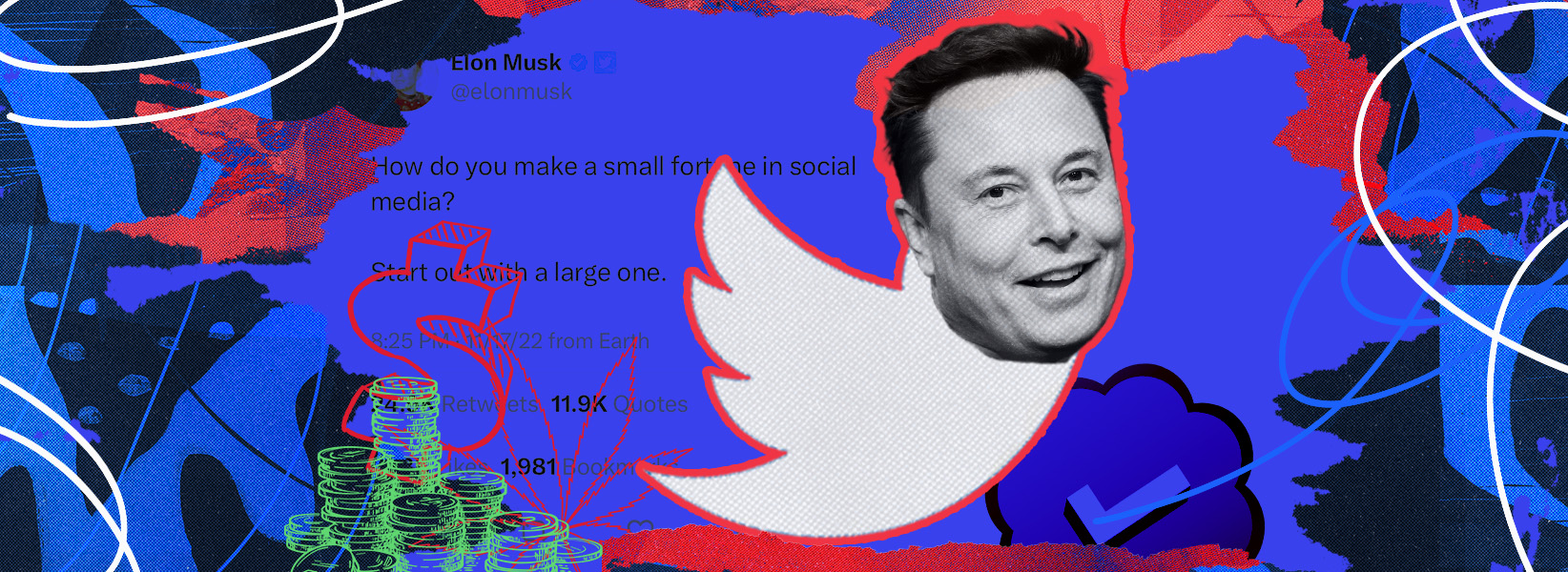
How changes to Twitter have affected Advertisers post-Elon Musk Purchase

From a $44 billion acquisition to an exodus of advertisers, Elon Musk's takeover of Twitter has sparked a seismic shift. Structural changes on the platform have failed to address harmful speech, leaving brands wary of compromising their 'brand safety.' As Pathmatics analysis reveals, over half of Twitter's top advertisers have pulled the plug. Dive into KingFish's timeline documenting the game-changing alterations on Twitter and their aftermath since Musk's purchase.

Twitter Infographic


Independent.
Full service.
24 years and running.

We’re always down to put heads together. Reach out to kick off a new partnership.

kingfish-logo-square
kingfish-partners-text-logo-footer-v4

© KINGFISH | KINGFISH + PARTNERS™ IS A TRADEMARK OF KING FISH MEDIA, LLC.
© 2025 WETWARE | WETWARE™ IS A TRADEMARK OF KING FISH MEDIA, LLC.
PRIVACY | TERMS